Barbie Camping Set: A Plain-English Guide
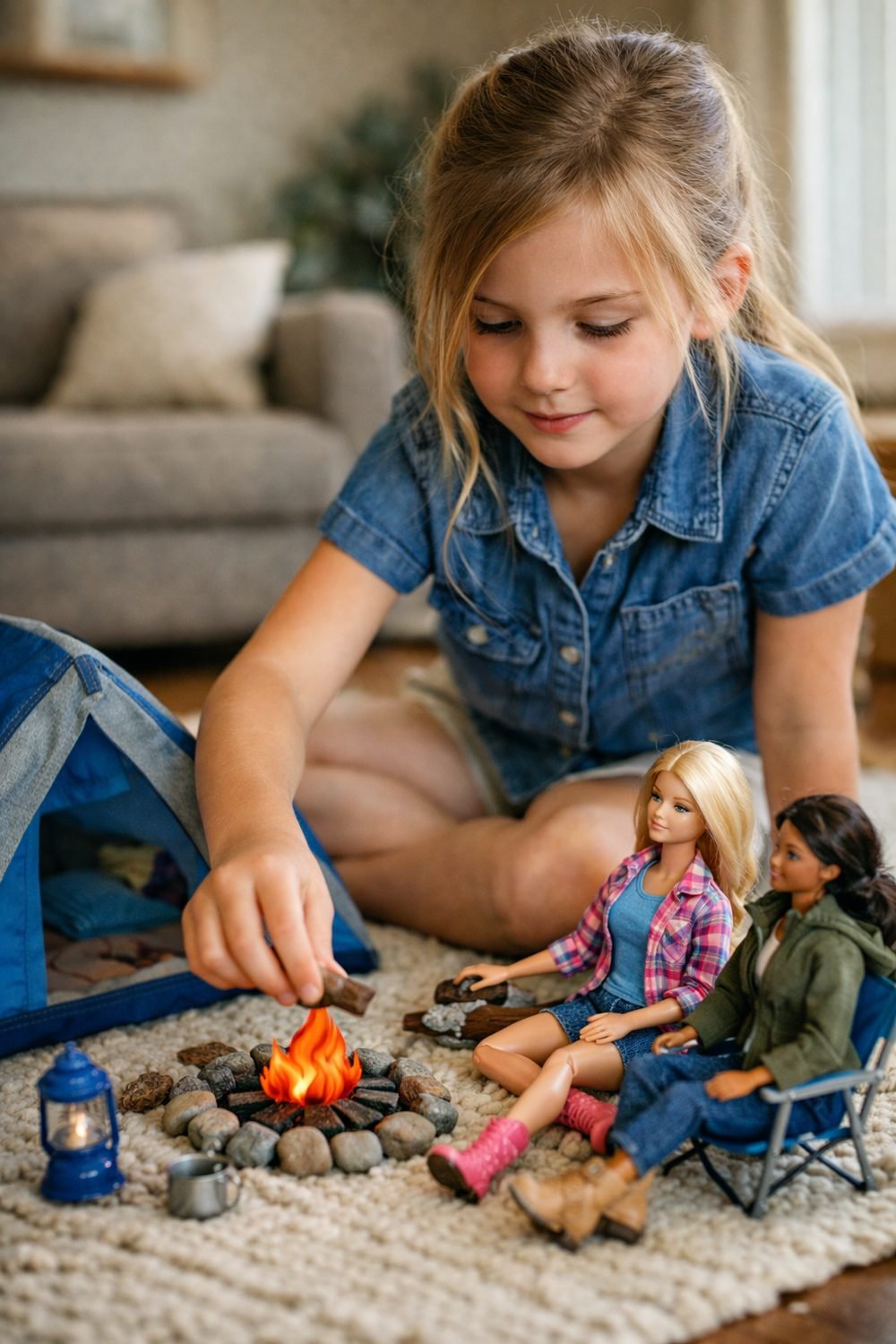
A Barbie camping set looks simple on the shelf, much like any other camping toys display. A tent, a few tiny pots, maybe a campfire that lights up. But once it's home, it can turn into weeks of play, or it can end up in a bin with half the pieces missing by Saturday. Both outcomes are common in a typical living room.
This guide walks you through what to check before you buy, so the set you pick actually gets played with. This guide covers the pieces, the size, the age range, how well these sets hold up, and the storage problem nobody warns you about. It also lists a few common mistakes so you can avoid them.
Short on time? Our top picks: Barbie Camping Playsets, Polly Pocket Camper and Outdoor Sets, Sylvanian Families Camping Sets and LEGO Friends Adventure Camp Sets. See all picks
Quick summary
- Read the piece list on the box or seller's page before buying. Photos often show extras that aren't included.
- Check the scale. Barbie-style sets are made for fashion dolls around 11 to 12 inches tall. Smaller dolls may look lost in them.
- Follow the age label. Tiny accessories can be a choking risk for little kids.
- Think about materials. Hard plastic and fabric tents wear out in different ways.
- Plan storage on day one. Small pieces vanish fast.
- Don't assume every doll fits. Brands and body styles vary.
Why a Barbie Camping Set Works So Well for Pretend Play
Most any Barbie doll set gives kids a place. A house, a kitchen, a car. A camping set gives them a story. Someone has to set up the tent. Someone forgets the marshmallows. A storm rolls in (usually announced very loudly by my youngest).
That built-in story is the real reason I like these sets. Kids don't need much prompting. They already know what camping looks like from books, cartoons, or a backyard sleepover, so they jump straight into playing.
It travels well, too
A lot of camping sets fold down or pack into a smaller shape. We've taken ours to grandma's house and on a long car trip. It kept two kids busy at a picnic table for a good hour, which felt like a small miracle.
It mixes with other toys
The tent becomes a hideout for stuffed animals. The campfire ends up in the dollhouse. It's easier to stop fighting this. If a set plays nicely with what you already own, it tends to last longer in your kid's rotation.
The Pieces: What's Actually in the Box
This is where I'd start. The front of the box shows a full, happy campsite. The small print on the side tells you what you really get.
Look for the list of included items. It's usually on the back or side of the box, or in the product details on the seller's page. Sometimes the photo shows a doll, a pet, or a vehicle that's sold separately. A common mistake is assuming the pet or accessory shown in the picture comes in the box, so check the contents list first to avoid a disappointed kid.
Common Barbie accessories you might see
- A tent (fabric, plastic, or a mix)
- Sleeping bags or bedrolls
- A campfire piece, sometimes with lights or sounds
- Cooking items like pots, a pan, cups, or play food
- Chairs or a small table
- A lantern, flashlight, or backpack
- Sometimes a doll, a pet, or a vehicle
Not every set has all of these. Some are small and basic. Others are big playsets with lots of extras.
More pieces isn't always better
Here's my honest opinion: a giant pile of tiny accessories sounds great but often isn't. Half of them get lost under the couch within a week. The pieces that get the most use in our house are the big ones: the tent, the fire, the sleeping bags. If a set has twenty tiny forks and spoons, I'd count that as clutter, not value.
A good set has a few sturdy main pieces your kid can build a scene around. Small extras are a bonus, not the reason to buy.
Scale: Making Sure the Barbie Camping Set Fits Your Dolls
Scale just means how big the set is compared to the dolls. Barbie camping sets are designed around fashion dolls that are roughly 11 to 12 inches tall. If that's what your kid plays with, you're probably fine.
Problems start when your kid's favorite dolls are a different size.
A quick comparison
- Standard fashion dolls: Usually a good fit. They can sit in the chairs and lie in the sleeping bags.
- Smaller dolls (like little sister-style dolls or mini figures): They'll fit in the tent, but cups and chairs may look huge next to them. Some kids don't care. Some do.
- Larger dolls (18-inch style): These usually won't fit at all. The tent might work as a shelf for them, but that's about it.
A simple way to check
If the seller's page lists the tent or set dimensions, grab a ruler and your kid's doll. Lay the doll down and see if she'd fit inside that length. It takes two minutes and saves a return trip.
Also check the doll body style. Some newer fashion dolls come in different heights and body shapes. A doll that's taller or curvier may be a tight squeeze in a sleeping bag made for the original shape. It's a small thing, but it can frustrate a kid who just wants her doll tucked in.
Age Range: Read the Box, Then Think About Your House
Every toy like this has an age label from the maker. Follow it. It's there for safety reasons, often because of small parts, and I'm not going to second-guess it.
If you're not sure whether a set is right for your child, check the seller's page and the box for any warnings. If you have questions about choking risks or safety for a specific child, your pediatrician is a good person to ask.
The sibling problem
This is the part that gets overlooked. Your older kid might be the right age, but if there's a toddler in the house, those tiny cups and marshmallow pieces become a worry. In our house, the camping set lives on a higher shelf and comes out at the table when the baby's napping.
Age labels don't tell you about interest
An age range tells you who the set is safe for. It doesn't tell you who will love it. Some kids outgrow dolls early. Others keep playing well past the top of the label. You know your kid better than the box does.
Durability: Plastic, Fabric, and What Holds Up
Camping sets usually use a mix of hard plastic and fabric. Each wears out in its own way.
Hard plastic pieces
Plastic tents, chairs, and campfires tend to hold their shape. The weak spots are usually hinges, clips, and thin parts that snap on. If a tent folds open with plastic tabs, those tabs take a beating. Be gentle with them for the first few days and show your kid how they work.
Fabric pieces
Fabric tents and sleeping bags feel softer and more real. They can also fray, stain, or get squashed. On the plus side, a bit of wear doesn't stop them from working. A slightly wrinkled sleeping bag is still a sleeping bag.
For cleaning, check the care info on the packaging or seller's page. Don't toss anything in the washer without checking first, especially if it has electronics or glued parts.
Lights and sounds
Some campfires light up or crackle. Kids love these. They also need batteries, which may or may not be included, so read the box. Electronic parts are often the first thing to stop working, so I wouldn't pay extra for a set mainly because of the light-up feature. If the rest of the set is good, the fire is a fun bonus.
Storage: The Part Nobody Plans For
To be honest about it: Storage is where our first camping set went wrong. We kept the original box. The box got torn. The pieces ended up mixed into a big toy bin. Within a month, nobody could find the campfire.
Now I do things differently.
What works for us
- A clear plastic box with a lid, such as a Sterilite bin, just for the camping set
- A small zip bag, like a Ziploc bag, inside it for the tiniest pieces
- A photo of the full set taped to the lid, so kids know what goes back in
That last trick helps a lot. Kids can match pieces to the picture during cleanup, and it turns into a little game instead of a fight.
Speaking of cleanup, if you want help building that habit, the free 1-Week Kids Chore Chart and Morning Routine Chart you get for joining our email list has a spot for tidying toys, and many kids enjoy checking it off.
Keep the box? Maybe not
Original boxes look nice but rarely survive. Unless you're planning to pass the set on or resell it, a sturdy bin will serve you better.
Compatibility: Mixing Brands and Barbie Looks
Brands vary, and so do doll sizes. A camping set from one brand might work great with another brand's dolls, or it might look a bit off. There's no rule that guarantees a match.
Things to compare
- Doll height: Even dolls sold as the same general size can differ by an inch or so.
- Hand shape: Some dolls can grip cups or flashlights. Others can't hold anything at all.
- Sitting ability: Dolls with bendable legs sit in chairs more easily than stiff-legged ones.
If your kid's dolls can't hold the little accessories, that's not a big deal. They'll prop things next to the doll. But it's good to know before you hear "she won't hold the marshmallow!" ten times in one afternoon.
Mixing with other camping toys and building sets
Some kids love building a whole campsite around the tent: a cabin, a lake, a little trail. Building blocks, such as LEGO Friends sets, are great for this. If that sounds like your kid, the Building Sets Mini-Store Starter Kit below this post might give you some ideas for pairing toys together.
Common Mistakes (Including Mine)
These mistakes are easy to make. Hopefully you can skip them.
- Trusting the box photo. Always read the "includes" list. Dolls and pets are often sold separately.
- Not checking doll size. A set that doesn't fit your kid's favorite doll will get ignored.
- Buying the biggest set by default. More pieces means more to lose and more to clean up. Bigger isn't always more fun.
- Forgetting about younger siblings. Small parts and toddlers don't mix.
- Skipping storage. Without a home for the pieces, the set falls apart fast.
- Paying extra just for lights and sounds. They're fun, but they're often the first thing to break.
- Not checking batteries. Nothing's sadder than a dark campfire on gift day. Read the box.
How to Get More Play Out of the Set
Once you've got it home, a little nudge helps. Not much. Kids do most of the work.
Simple play ideas for a camping night
Try a "camping night" where the dolls go to sleep at the same time your kid does. Mine thought this was the best idea ever. You can also use real stuff from around the house: a blue towel for a lake, a cereal box for a cabin, a few sticks from the yard for firewood.
Storytelling works too. Ask, "What happens if it rains?" or "Who forgot the food?" and step back. You'll be surprised what comes out.
Rotate it
Toys feel new again after a break. We put the camping set away for a few weeks, then bring it out on a rainy day. It always gets more attention that way than if it's sitting out all the time.
Camping Sets and Helpers Worth a Look
Here are a few real products and brands that fit what this guide covers, from the doll set itself to storage and add-on play. Treat them as starting points and compare each against the checklist above.
Barbie Camping Playsets
Mattel makes camping-themed sets under the Barbie name, and they suit kids who already own standard fashion dolls. Check the piece list on the box or seller's page, since dolls, pets and vehicles are sometimes sold separately.
Polly Pocket Camper and Outdoor Sets
This is a good fit if your child plays with very small dolls and likes compact, carry-along play. Check the age label carefully, because the pieces are tiny and may not suit a house with a toddler.
Sylvanian Families Camping Sets
These suit families who like small animal figures and gentle, story-driven play rather than fashion dolls. Check that the scale makes sense for what your child already owns, since these are not made for Barbie-sized dolls.
LEGO Friends Adventure Camp Sets
A solid pick for kids who like to build a campsite and then play in it. Check the age range and the piece count, as small bricks can be a hassle for younger siblings and for cleanup.
Melissa & Doug Pretend Play Camping Toys
These suit parents who want larger, simpler camping pretend play for kids rather than for dolls. Check the size of the items against your child's dolls before assuming they will work together.
Sterilite Clear Storage Bins
Handy for the lidded-bin storage idea in this guide, since you can see the pieces inside. Check the bin size against the biggest piece in the set, usually the tent, before you buy.
Ziploc Storage Bags
A cheap way to keep tiny accessories together inside a larger bin. Check that the bags are a size that fits your smallest pieces, and keep them away from toddlers.
Check current plans and prices on each brand's own site before you buy.
FAQ
Will a Barbie camping set fit other fashion dolls and Barbie looks?
Often, yes, if the dolls are a similar size, around 11 to 12 inches. Different body styles and brands can fit a bit differently, though. Check the set dimensions on the seller's page and compare them with your doll if you're unsure.
What age is a camping set good for?
Follow the age range printed on the box or seller's page, since it reflects safety concerns like small parts. If you have younger kids at home, keep tiny pieces out of their reach. For specific safety questions, ask your pediatrician.
Are the lights and sounds worth it?
They're fun, and a lot of kids love a glowing campfire. But electronic parts can stop working before the rest of the set, and they need batteries. Treat them as a bonus, not the main reason to buy.
How do I stop the small pieces from getting lost?
Give the set its own lidded bin, with a small bag inside for tiny items. Taping a photo of all the pieces to the lid makes cleanup easier for kids. It sounds simple, but it really helps.
Your Next Step
If you're ready to pick a camping set, start with the piece list and your kid's favorite doll, and you'll avoid most of the headaches. Then set up a storage bin before the first play session. While you're thinking about tidy-up habits, grab the free 1-Week Kids Chore Chart and Morning Routine Chart from the sign-up box. After that, take a look at the products below this post, including the Building Sets Mini-Store Starter Kit and the Daily Family Routine Deals Page Publishing Kit, and see if either fits what your family needs right now.
Printables and tools that can help
Building Sets Mini-Store Starter Kit
A kit for planning a small building sets shop: product list, listing copy and...
See detailsDaily Family Routine Deals Page Publishing Kit
A kit for running a simple deals feed about stem toys: post templates and a weekly...
See details