Best Board Games for Adults: Beginner Checklist

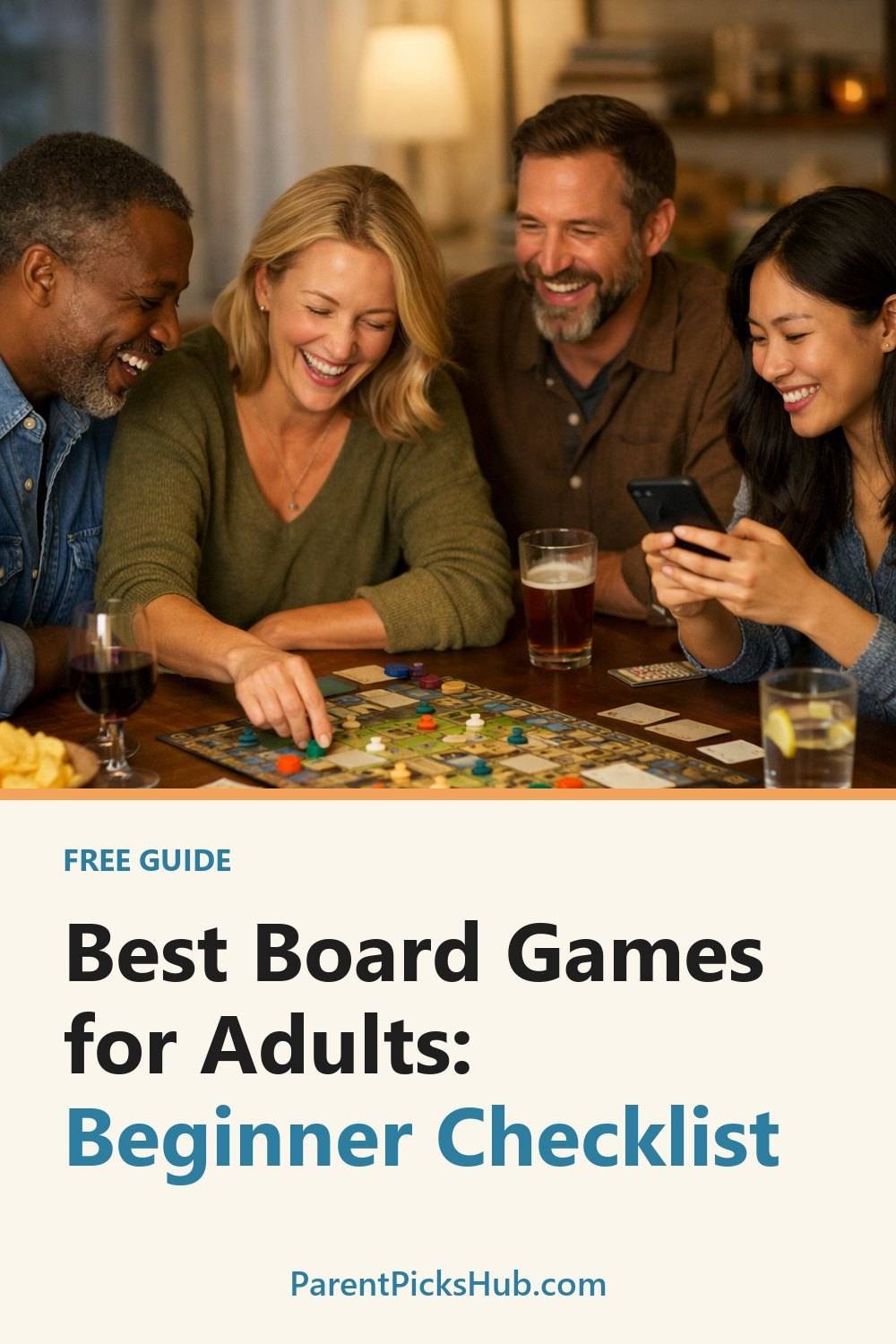
Here's the thing many people overlook when buying their first of the best board games for adults: the game matters less than the group. Bringing one of those best strategy board games, long and clever, to a relaxed Friday night with friends can fall flat. Two people loved it. Everyone else was checking their phones by round three.
So this isn't a list of top board games by title. It's the checklist I wish I'd had. Run any game you're eyeing through these points before you buy, and you'll waste a lot less money on boxes that sit in the closet.
Short on time? Our top picks: Ticket to Ride, Catan, Pandemic and Codenames. See all picks
1. Check the Player Count (and Read It Carefully)
Every box prints a player range, like 2 to 6. That number tells you what the rules allow. It doesn't always tell you what's actually fun. Some games technically work with two people but really come alive with five. Others drag badly at the top of their range because you're waiting forever for your turn.
Think about who you'll play with most. For many couples, that's usually just the two of you after the kids are asleep. Big group nights happen maybe once a month. So it helps to buy for the usual night, not the rare one.
Practical tip: Look at reviews or the seller's page for comments about the "best" player count, not just the allowed range. Players often mention it.
2. Be Honest About Play Time
The time on the box is a guess, and it's usually a guess made by people who already know the rules. Your first game will almost always take longer. Sometimes a lot longer.
Picture a real evening. If you're starting at 8:30 after bedtime battles and dishes, a game that says 90 minutes might really mean you're up past midnight. That's fine on a Saturday. On a Tuesday, not so much.
Keeping a mix on the shelf works well. A couple of quick games that take 15 to 30 minutes, and one or two longer ones saved for nights when nobody has to be up early.
Practical tip: For your first play, add about half the listed time again. If that still fits your evening, you're good.
3. Look at How Long the Rules Are in Board Games for Adults
This is the one that trips up most beginners. A rulebook can be a single folded page or a thick booklet with diagrams on every spread. Neither is wrong. But a long rulebook means somebody has to read it, understand it, and then teach it to everyone else.
If that somebody is you, be ready. It is easy to spend a full hour at the table explaining a game while everyone politely nods and eats all the snacks. It was not my finest hosting moment.
Starting simple is smart. Once your group enjoys a few easy games, they'll be much more willing to sit through a longer explanation later.
Practical tip: Read the rules before guests arrive, and watch a "how to play" video if one exists. Teaching goes faster when you've already played a practice round alone.
4. Match the Mood: Teamwork or Competition?
Some groups love to compete. They trash-talk, they keep score, they want a clear winner. Other groups get tense when things turn cutthroat, and someone always ends up a little hurt.
Cooperative games, such as Pandemic, are the answer for that second kind of group. Everyone plays together against the game itself, so you either all win or all lose. These tend to work well as board games for couples, new friends, or anyone who's nervous about "not being good at games."
Party games, which are often fun board games for adults, sit somewhere in the middle. They're usually loud, silly, and light on rules. Honestly, they're overrated for small groups of two or three. They need a crowd to work, which is why something like Codenames suits bigger groups.
Practical tip: Think about your most competitive friend and your most sensitive one. Pick a style that keeps both of them happy, or at least comfortable.
5. Measure Your Table
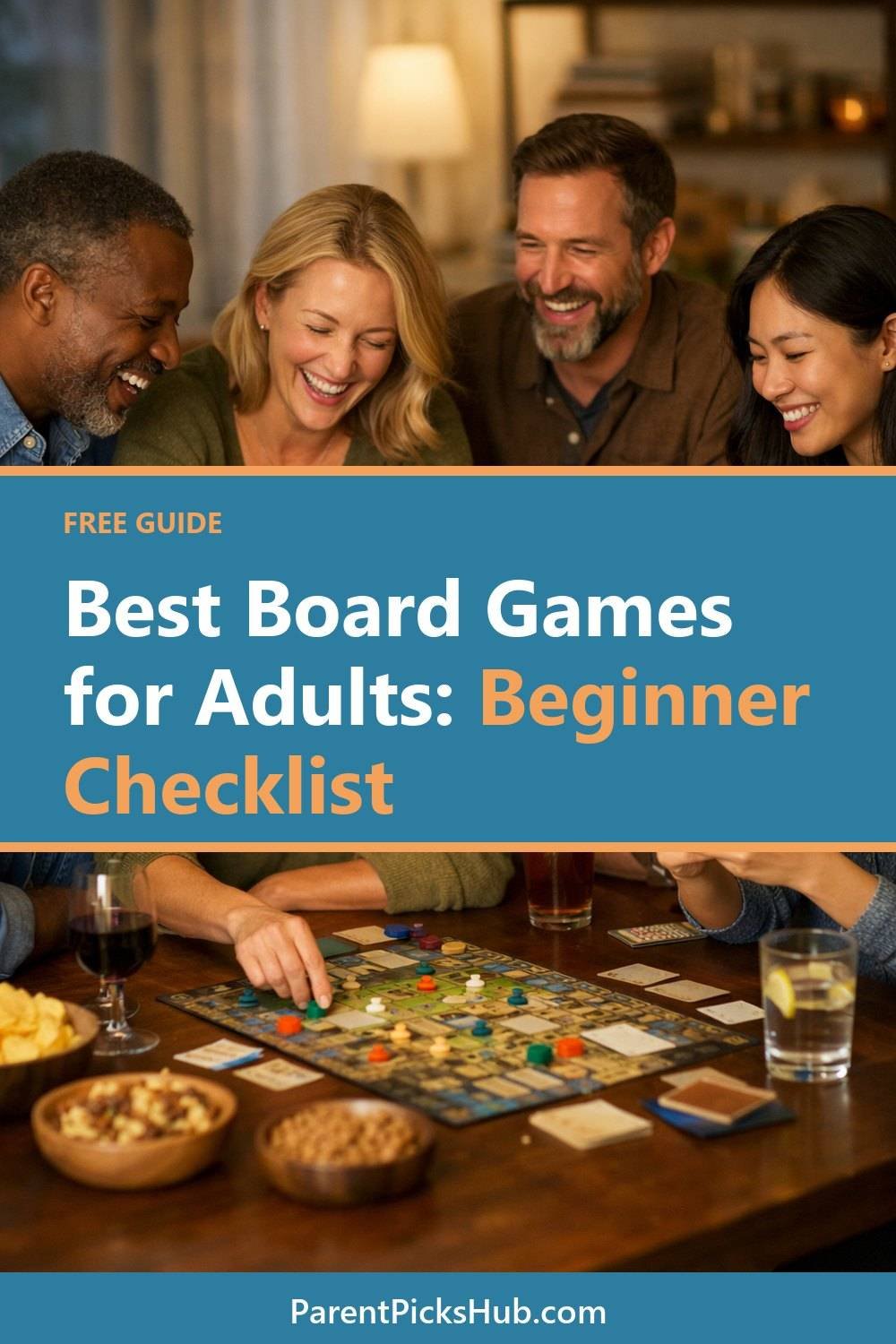
This sounds silly until it happens to you. Some games spread out with boards, cards, tokens, and individual player mats. Suddenly there's no room for drinks, snacks, or elbows.
Our kitchen table is small and round. If a game needs a long rectangle of space, you may end up playing on the living room floor, so check the table size on the box first. Fun once. Bad for my knees.
Pictures on the box or seller's page usually show the game fully set up. Look closely at how much space it takes. Card-based games, like Exploding Kittens, are often much easier on a small table.
Practical tip: Keep a tray or a small side table nearby for drinks. Spilled soda on game cards is a sad, sticky lesson.
Quick side note for parents: if part of the reason you want game nights is to have calmer evenings, our free 1-Week Kids Chore Chart and Morning Routine Chart can help smooth out the rest of the day, and you can grab it by joining the email list.
6. Think About Replay Value in Good Family Board Games
Some games feel amazing the first time and boring the third. Others change every round because of shuffled cards, different setups, or different player choices. That second kind is what you want if you're buying just a few games.
Ask yourself: will round five feel different from round one? If the answer is "probably not," the game might be better as something you try at a friend's house instead of something you own.
On the other hand, a game you play once a year at holidays, like Christmas board games, doesn't need much replay value. It just needs to be fun that one night.
Practical tip: Look for words like "variable setup" or "random" on the seller's page. They usually hint that rounds will play out differently.
7. Don't Forget Setup and Cleanup
Nobody mentions this, but it matters. A game with hundreds of tiny pieces takes time to set out and even longer to put away. At the end of a late night, sorting little wooden cubes into bags is the last thing I want to do.
If you love a game like that, little zip bags or small containers help a lot. Some people get really into organizing their game boxes. You don't have to be one of them to borrow a few of their ideas.
Also, keep small pieces far from little hands. With kids in the house, I store our adult games on a high shelf. If you need something to keep younger kids busy in the next room while the grown-ups play, the Building Sets Mini-Store Starter Kit below this post might be worth a look.
Practical tip: Time yourself setting up the game once. If it takes more than ten minutes, set it up before guests arrive.
8. Pick a Theme Your Group Actually Likes
Games come wrapped in every theme you can think of: mysteries, farming, space, trains, fantasy creatures, history. The theme doesn't change the rules much, but it changes whether people want to sit down at all.
Some people will play almost anything with animals on it. Others perk up for anything with a mystery. Knowing that makes choosing so much easier.
Don't buy a theme just because it looks impressive. Buy one your people will actually get excited about.
Practical tip: Before buying, mention the theme to your group casually. Their reaction tells you a lot.
If you like keeping track of these details, I jot down who liked what after each game night. A simple planner works well for that, and the Parent Planner and Checklist Bundle below this post has pages you could use for it.
Board Games Worth Looking At
These are well-known games that tend to come up for beginners. Use the checklist above to decide which one fits your group.
Ticket to Ride
A friendly pick for new players who want something easy to teach. It suits couples and small groups who like light strategy. Check the player range and the map version you are buying, since different editions play a little differently.
Catan
A classic for groups that enjoy trading and a bit of friendly competition. It suits people ready for a medium-length game. Check whether your group is comfortable with negotiation, because some players find it stressful.
Pandemic
A cooperative game where everyone works together against the board. It suits couples and groups who dislike cutthroat play. Check that your group is happy to win or lose together, and be ready for a rules explanation on the first night.
Codenames
A word-based party game that suits larger, chatty groups. It is a good fit when you want something light and social. Check the group size you usually have, as party games like this tend to shine with a crowd.
Azul
A tile-placing game with a calm feel, often liked by couples and small tables. It suits people who want something pretty and not too long. Check how much table space you have and whether you like quieter, puzzle-style play.
Carcassonne
A tile-laying game that suits beginners who want simple turns with some strategy. It works for people who like building something together on the table. Check which edition you are buying and how much room you can spare for the growing layout.
Exploding Kittens
A quick card game that suits casual groups and silly nights. It is easy on small tables and light on rules. Check the content and humor style first, since it may not suit every group or every age.
Check current plans and prices on each brand's own site before you buy.
FAQ
How many games should a beginner buy?
Start with one or two. Play them a few times and see what your group enjoys before buying more. It's easy to fill a shelf with games nobody really wants to play.
Are cooperative games good board games for couples?
They often are, especially if one of you is more competitive than the other. Working as a team can feel relaxing after a long day. Still, some couples love a friendly rivalry, so go with what fits you two.
What if nobody in my group wants to learn the rules?
Pick a game with very short rules and learn them yourself first. Teach as you play instead of reading everything aloud up front. Most people pick things up faster once they're actually taking turns.
Can kids join adult game nights?
Sometimes, depending on the game and the child. Check the age guidance on the box or the seller's page, and watch out for small pieces with younger kids. Often it's easier to keep a separate, simpler game ready for them, since the best family board games work for mixed ages.
That's my checklist. Take it with you next time you're tempted by a shiny new box. If you'd like help making the rest of your week run a little smoother, sign up for the free 1-Week Kids Chore Chart and Morning Routine Chart first. Then take a look at the Parent Planner and Checklist Bundle and the Building Sets Mini-Store Starter Kit below this post to see if either fits your family.
Printables and tools that can help
Parent Planner and Checklist Bundle
A printable bundle with a 30-day goal page, weekly planner and checklists for...
See detailsBuilding Sets Mini-Store Starter Kit
A kit for planning a small building sets shop: product list, listing copy and...
See details