Best Outdoor Toys: Who It Suits and Who Should Skip It
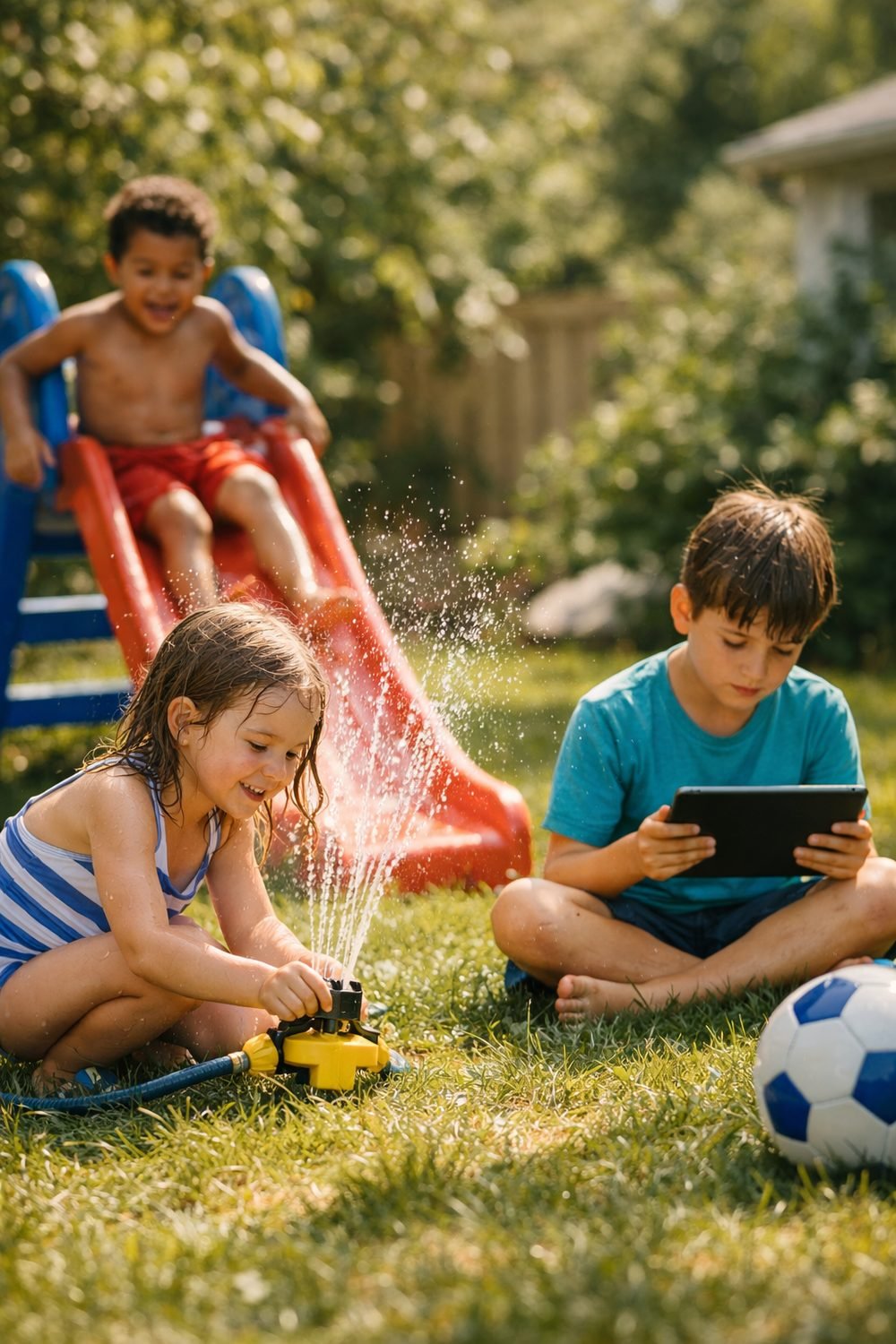
The best outdoor toys suit some yards and some children better than others. Many people learn this the slow way: a big plastic slide can sit in a corner for most of a summer while kids play with a bucket and a hose instead.
So this isn't a list of "the best toys ever." It's more of an honest sorting guide. Below you'll find the situations where outdoor toys tend to work out well, and the ones where you might want to hold off or pick something smaller. Read it with your own yard and your own kids in mind.
Short on time? Our top picks: Little Tikes, Step2, Radio Flyer and Strider. See all picks

1. Good fit: you have a safe, fenced yard for outdoor toys
A fenced yard changes everything. When there's a clear edge to the space, kids can run, ride and throw without you jumping up every thirty seconds. Bigger toys like ride-ons, small climbing frames, soccer goals and even outdoor swing sets make a lot more sense here.
It also means a ball that rolls away isn't heading for the street. That one detail took a lot of stress out of our afternoons. You can sit on the step with a coffee and actually drink it while it's warm.
Fences aren't all the same, though. A gap under a gate or a loose board can be just the right size for a small kid to squeeze through, so do a walk around before you set anything up.
Practical tip: Walk the fence line at your child's eye level, crouching down. You'll spot gaps, sharp bits and loose latches you'd never see standing up.
2. Good fit: kids who can't sit still
Some children are just built to move. If yours climbs the couch, bounces off walls and treats every hallway like a racetrack, outdoor toys can give that energy somewhere better to go.
Ride-ons, balance bikes such as those from Strider, balls of different sizes and simple things like hula hoops tend to get real use with active kids. A cheap set of cones can easily get more play than anything with batteries. They became race tracks, obstacle courses and "lava zones" depending on the day.
Not every kid works this way, and that's fine. Some kids would rather dig in the dirt for an hour than race anyone. If your child is more of a quiet builder, a sandbox or outdoor play kitchen from a brand like Step2, or a small outdoor table, might suit them better than a ride-on. Some kids also just like building indoors more, and there's nothing wrong with that.
Practical tip: Before buying, watch what your child already does outside for a week. Do they run, dig, climb or pretend? Buy for the play they already love, not the play you wish they'd do.
3. Good fit: parents who can supervise
Here's the part toy boxes don't always say out loud. Most outdoor toys work best when an adult is nearby. Swings, trampolines, ride-ons and anything involving outdoor water play need eyes on them, especially with younger kids.
The good news is that outdoor play is often easier to watch than indoor play. Everyone is in one open space, which makes outdoor games for families much easier to enjoy. You're not wondering what's happening in the next room. You can fold laundry on the patio or answer a few messages and still see the whole yard.
If your days are packed and you can't be outside much, that's worth being honest about. A toy that needs constant watching might end up locked away, which is money spent on nothing. Some families find it helps to plan outdoor time into the daily rhythm so it actually happens. If you like that kind of structure, our free 1-Week Kids Chore Chart and Morning Routine Chart is in the sign-up box, and it has room to pencil in outside time.
Practical tip: Check the age range and supervision notes on the seller's page for any toy you're thinking about. If something isn't clear, ask the seller before you buy.
4. Skip (or go small) if: you have very little space
A tiny yard, a balcony or a shared patio doesn't mean no outdoor toys. It just means skipping the big stuff. A full-size trampoline or a swing set in a small space usually means cramped, bumpy play and a lot of "watch out!"
Smaller toys work well here. Think chalk (Crayola makes a well-known sidewalk kind), bubbles, a small water table, bean bags, a soft ball or a mini basketball hoop. Small toys like these are easy to tuck away. Honestly, sidewalk chalk is one of the most underrated cute toys out there. It's cheap, it's quiet, and it keeps kids busy longer than you'd expect.
Skip anything that needs a "safe zone" around it bigger than the space you actually have. If the toy's instructions talk about clearance on all sides, measure first.
Practical tip: Use a tape measure and mark out the toy's footprint with string or chalk before buying. Then add space around it for kids to move. It's surprising how fast a yard fills up.

5. Skip if: your ground is rough or uneven
Gravel, bumpy grass, roots and slopes can make some toys frustrating or wobbly. Ride-ons with small hard plastic wheels are the usual problem. They get stuck, tip easily and kids give up on them quickly.
We had a little plastic car that worked great on the driveway and was basically useless on our lumpy lawn. A kid might push it for five minutes before abandoning it for a stick. Lesson learned.
If your ground is rough, look at wheel size and type on the product details. Larger wheels usually handle bumps better. And for anything that's meant to stand still, like a slide or climbing frame, it needs flat ground to sit steady. Follow what the seller says about setup and surfaces.
Practical tip: Push a stroller or wheelbarrow across the area your child will play on. If it's hard work for you, a small ride-on will be harder for them.
6. Skip if: you have nowhere to store them
This one catches a lot of parents. Toys left outside all the time can fade, crack, rust or fill up with water and bugs. Sun is often harder on plastic than rain is. After one summer, our bright red wagon had turned a sort of tired pink.
If you don't have a shed, garage or covered spot, think about how much you really want to carry inside every evening. Big toys that can't be moved easily are the ones that suffer most. Small toys you can toss in a bin are much easier to live with.
A lidded storage box or a simple tarp can help, but check what the toy's maker says about outdoor storage. Some are fine left out, some really aren't.
Practical tip: Make putting toys away part of the end of outdoor play. A "last five minutes" clean-up gets kids helping, and it stops things from sitting out overnight.
7. Worth thinking about: your weather and seasons
Where you live matters more than people think. In a hot area, a dark plastic slide in full sun can get very warm. In a rainy area, toys might sit unused for weeks. In places with snow, you might only get a few good months for wheels and balls.
Lean toward toys that work in more than one season, or ones that are cheap enough not to feel bad about. A water table is one of the easiest outdoor water toys for summer, but in cooler months it can become a sand or leaf station. Balls work almost any time. Big seasonal items are the ones I'd think hardest about.
Practical tip: Feel any slide, seat or surface with the back of your hand before your child uses it on a sunny day. Shade, if you can add it, makes a real difference.
Outdoor toy picks worth a look
These are well-known brands that make outdoor toys for a range of yards and ages. Match each one to your space, ground and storage before you decide.
Little Tikes
Suits families who want sturdy plastic play items like slides, ride-ons and water tables for the backyard. Check the footprint and the age range, and see what the maker says about leaving items outside in strong sun.
Step2
A good fit for parents looking at sandboxes, water tables, play kitchens and climbers for toddlers and preschoolers. Check how much space the item needs and whether it can be stored out of the weather.
Radio Flyer
Well known for wagons, trikes and ride-ons, which suits kids who love to move and haul things around. Check the wheel type if your ground is bumpy, since smooth hard wheels can struggle on grass.
Strider
Makes balance bikes that suit young kids who are ready to practice gliding before pedals. Check the seat height range against your child's inseam so the fit is comfortable.
Melissa & Doug
Offers simple outdoor items like bug catchers, bubble tools and sand toys that work well in small spaces. Check the age labels and the materials, as some pieces are better for light, supervised play.
Crayola
Their sidewalk chalk is a low-cost choice for balconies, patios and small yards. Check the washability notes for your surface, and keep chalk away from very young kids who still mouth things.
Little Tikes Easy Score Basketball Set
Suits families with a small patch of flat ground who want a simple active game for little ones. Check that the base sits steady on your surface and that there is room around it for play.
Check current plans and prices on each brand's own site before you buy.
FAQ
What's a good first outdoor toy for a young child?
Simple, low-cost toys are a great place to start, like a ball, bubbles, chalk or a bucket and spade. They let you see what your child enjoys before you spend more. Always check the age range on the seller's page.
Are big outdoor toys like an outdoor play set worth the money?
They can be, if you have the space, flat ground, storage and time to supervise. If you're missing one or two of those, a big toy often gets less use than you'd hope. Start small and size up once you know what your kids actually play with.
How do I keep outdoor toys from wearing out so fast?
Bring them in or cover them when not in use, and keep them out of strong sun where you can. Rinse off mud and sand now and then. The maker's care notes are the best guide for each toy.
My kid prefers playing indoors. Should I still buy outdoor toys?
Maybe, but keep it light. Try bringing indoor favorites outside, like building blocks on a blanket or crayons at a patio table. If you're curious about building toys, the Building Sets Mini-Store Starter Kit is below this post.
If you've read this far, you probably already have a good sense of whether your yard and your kids are ready for bigger outdoor toys or better off with small ones for now. Either answer is fine. A good next step is to grab the free 1-Week Kids Chore Chart and Morning Routine Chart from the sign-up box, so outside time has a regular spot in the day. After that, take a look at the products below this post, including the Daily Family Routine Deals Page Publishing Kit, and see if anything fits how your family runs.
Printables and tools that can help
Building Sets Mini-Store Starter Kit
A kit for planning a small building sets shop: product list, listing copy and...
See detailsDaily Family Routine Deals Page Publishing Kit
A kit for running a simple deals feed about stem toys: post templates and a weekly...
See details