Best Strategy Board Games: Beginner Checklist
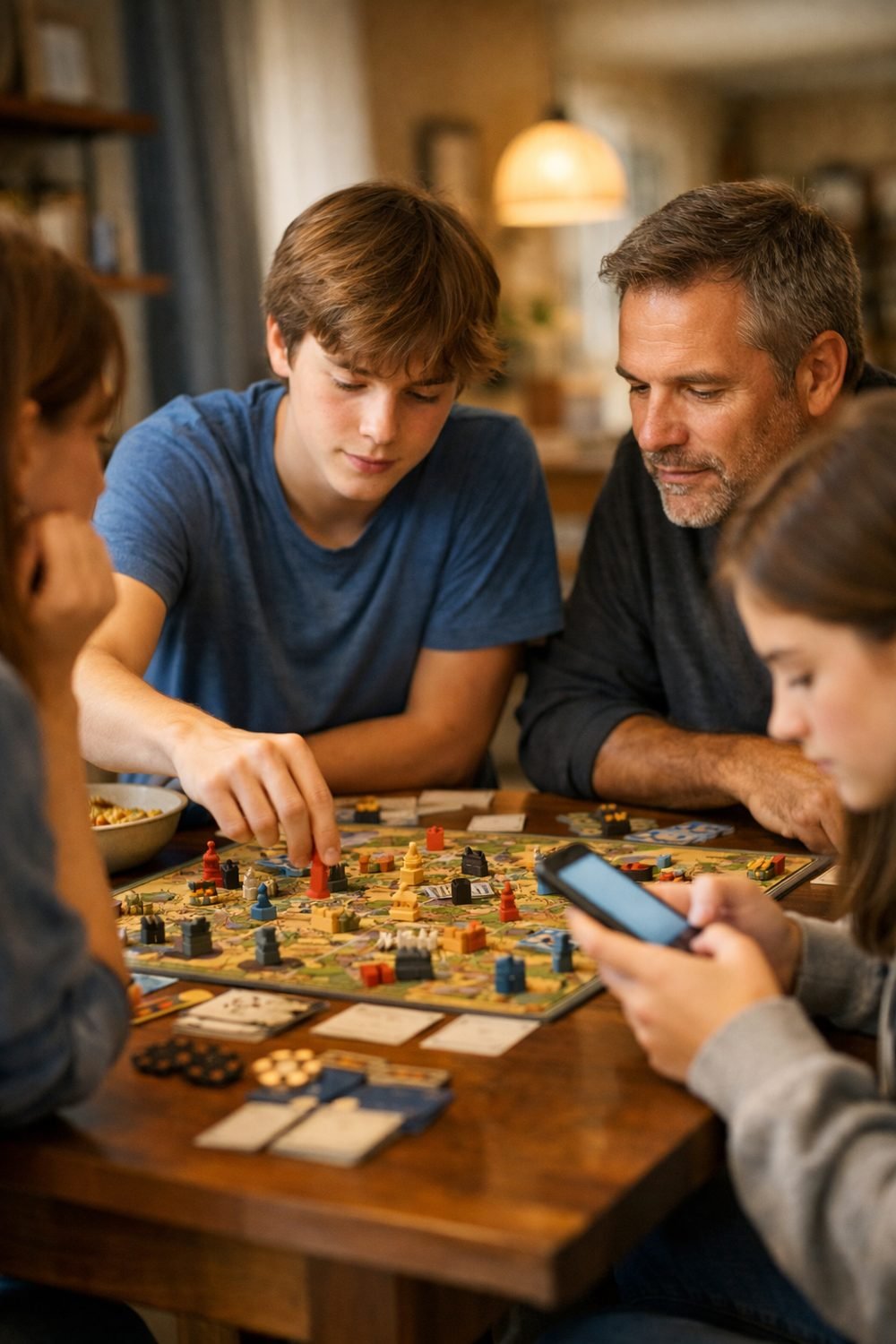
The best strategy board games reward planning, which is exactly why they can go wrong on a family night. Pick one that's too deep and your nine-year-old checks out by turn three. Pick one that's too shallow and the adults are scrolling their phones. Both mistakes are easy to make, and plenty of people make them more than once.
So here's the checklist I actually use now before buying one of the good board games for our house. None of it needs special knowledge. You just need to read the box carefully and be honest about who's sitting at your table.
Short on time? Our top picks: Ticket to Ride, Catan, Carcassonne and Pandemic. See all picks
1. How Long Strategy Board Games Take to Learn
This is the one I ignored for years. A game can be fun once you know it, but if it takes a full play just to understand the rules, a lot of families never get to the fun part. Kids especially want to play, not sit through a lecture.
Ask yourself a simple question: could you explain the basic turn in about five minutes? If the rulebook is thick and full of exceptions, that's a warning sign for a first strategy game. Some boxes include a "quick start" sheet or a first-game setup, and I've found those really help.
Practical tip: Read the rules alone the night before. Play a couple of pretend turns by yourself. You'll teach it far better, and nobody has to wait while you flip pages.
2. The Player Count Range
Every box lists a player range, like 2 to 4. That number tells you who can play, but not always who it's good for. Plenty of games technically work with two players but really shine with four. Others drag with a full table because everyone waits too long between turns.
Think about how you'll usually play, since the best family board games match your real table. In our house it's often just me and one kid on a rainy afternoon, so I care a lot about whether a game holds up with two. If you've got a bigger family or cousins visiting, you'll want something that handles more people without slowing to a crawl.
Practical tip: Look for reviews or comments that mention your exact player count. "Great at 3" is more useful to you than a general rating if three is your normal number.
3. The Stated Play Time
The box says 30 minutes. Your first game takes an hour and ten. That's normal, honestly. Play time on the box usually assumes players who already know the game, and kids think longer, ask more questions, and need snack breaks.
It's wise to roughly double the listed time for your first few plays. Once everyone knows what they're doing, things speed up. But if a game says 90 minutes on the box, be realistic about whether your family can sit that long on a school night.
Practical tip: Keep a short game around for weeknights and save the longer one for weekends. Having both means you're not forcing a big game into a small evening.
4. Rule Weight: Light, Medium or Heavy Board Games for Adults and Kids
People who play a lot of board games talk about "weight." It just means how complex a game feels. Light games have simple choices. Medium games give you more to think about each turn. Heavy games have lots of moving parts and can feel like a puzzle you're juggling.
For beginners, light or light-medium is the sweet spot. You still get real decisions, like whether to grab something now or save up for later, but nobody's brain melts. Heavy games are often a bit overrated for families starting out. They look impressive, but they often end up on the shelf.
If you've got an older kid who loves building things and figuring out how parts fit together, they may be ready for more sooner than you'd think. That same planning brain is what makes kids love construction toys too, which is partly why we put together the Building Sets Mini-Store Starter Kit below this post.
Practical tip: Check the age on the box, but treat it as a guide, not a rule. You know your child's patience better than any label does.
5. Replay Value
A good strategy game should feel a little different each time. Maybe the board is built from tiles that change, like in Carcassonne. Maybe there are cards that shuffle into a new order. If every game plays out the same way, kids figure out the "best" move and lose interest fast.
When I'm deciding, I look for some kind of variety built in. Random setups, different starting roles, or a few ways to win all help. A game your family wants to play twenty times is worth more than a fancier one you play twice.
By the way, if you're trying to fit game nights around a busy week, our free 1-Week Kids Chore Chart and Morning Routine Chart can help clear some space in the schedule, and you can grab it by joining our email list.
Practical tip: After a few plays, ask your kids what they'd try differently next time. If they have ideas, the game has depth. If they shrug, it might be done.
6. Table Space
This sounds silly until it happens to you. It's easy to open a game, unfold the board, lay out the cards and player pieces, and only then realize it doesn't fit on your kitchen table. We ended up on the living room floor, and the dog walked right through the middle.
Look at photos of the game set up, not just the box, especially for giant board games. Count how much room each player needs for their own cards or pieces. Some games are tiny and travel well, and wooden board games often feel sturdy enough for that. Others need a dining table with nothing else on it.
Practical tip: Use a cheap tray or a shallow box lid for loose pieces. It keeps small bits from rolling off the table and makes cleanup faster.
7. How Mean It Gets
This one is included because it can easily cause tears, especially with younger players. Some strategy games let you block, steal from, or knock out other players. That can be exciting for some kids and teens and crushing for others, especially younger ones or kids who take losing hard.
Games where everyone builds their own thing and you compare scores at the end tend to feel gentler. There are also cooperative games, such as Pandemic, where the whole family works together against the game itself. Those are a great first step if competition gets heated.
Practical tip: Watch how your kids handle a quick card game before buying something with lots of "take that" moves. Their reaction will tell you plenty.
8. Whether It Teaches Something Along the Way
You don't need to buy games just to sneak in learning. Fun comes first. But it's a nice bonus when a game quietly practices counting, reading, planning ahead or taking turns patiently.
Plenty of parents I know use board games as a calm break between schoolwork and screen time. If that's you, you might like pairing game night with simple printables. We offer the Printable Activity and Lesson-Plan Monthly Service Kit below this post for families who like having activities ready to go.
Practical tip: Let kids keep score when they're able. It's real math practice, and they usually love being in charge.
Our top picks
Here are a few well-known strategy games that families often start with. Each one suits a different kind of table, so read the notes and pick the one that matches yours.
Ticket to Ride
A popular first step for families who want a gentle introduction to planning ahead. It suits newer players who like building routes and don't want much direct conflict. Check the player range on the edition you're considering.
Catan
A long-running favorite that mixes trading, building and a little luck. It suits families with older kids and teens who enjoy talking and bargaining. Check how your kids feel about trading and blocking, since it can get competitive.
Carcassonne
A tile-laying game where the map grows differently each time. It suits beginners who like a simple turn and a board that changes. Check which edition or size you're getting, as there are several versions.
Pandemic
A cooperative game where everyone works together against the board. It suits families who want to avoid hurt feelings over losing. Check the age guidance, since the theme and the number of things to track may suit older kids better.
Azul
A pattern-building game with a pleasing look and a fairly quick learning curve. It suits families who like a calmer, puzzle-like style of play. Check the player range, and look for reviews from people who play at your usual count.
Splendor
A card and gem collecting game that rewards planning without a huge rulebook. It suits families who want something that sets up fast. Check how it feels with your group, since some players enjoy racing ahead more than others.
Forbidden Island
A cooperative game aimed at younger players who are ready for shared decisions. It suits families wanting a friendly first strategy game. Check the age on the box and consider how long your kids can focus.
Check current plans and prices on each brand's own site before you buy.
FAQ
What age can kids start playing strategy games?
It depends on the child and the game. Many simple strategy games are made for early elementary kids, while heavier ones suit older kids and teens. Check the age on the box and think about your child's patience and reading level.
Should my first pick from the best strategy board games be cooperative or competitive?
If anyone in your family struggles with losing, cooperative is a kind place to start. Everyone wins or loses together, so there's less pressure. You can move to competitive games once everyone's comfortable.
How many strategy games does a family really need?
Honestly, two or three good ones are plenty to start. A short one for weeknights and a longer one for weekends covers most needs. It's better to play a few games often than own a big stack nobody touches.
What if my kids get bored halfway through?
That usually means the game is too long or too complex for now. Try stopping early and finishing another day, or switch to something lighter. You can always come back to it in a year.
If you want an easy first step, grab the free 1-Week Kids Chore Chart and Morning Routine Chart by joining our email list. A smoother week leaves more room for game night. Then, if they fit your family, take a look at the Building Sets Mini-Store Starter Kit and the Printable Activity and Lesson-Plan Monthly Service Kit below this post.
Printables and tools that can help
Building Sets Mini-Store Starter Kit
A kit for planning a small building sets shop: product list, listing copy and...
See detailsPrintable Activity and Lesson-Plan Monthly Service Kit
A kit for turning printable activity and lesson-plan into a monthly service with templates and a scope...
See details