Toy Kitchen Set: Questions to Ask First
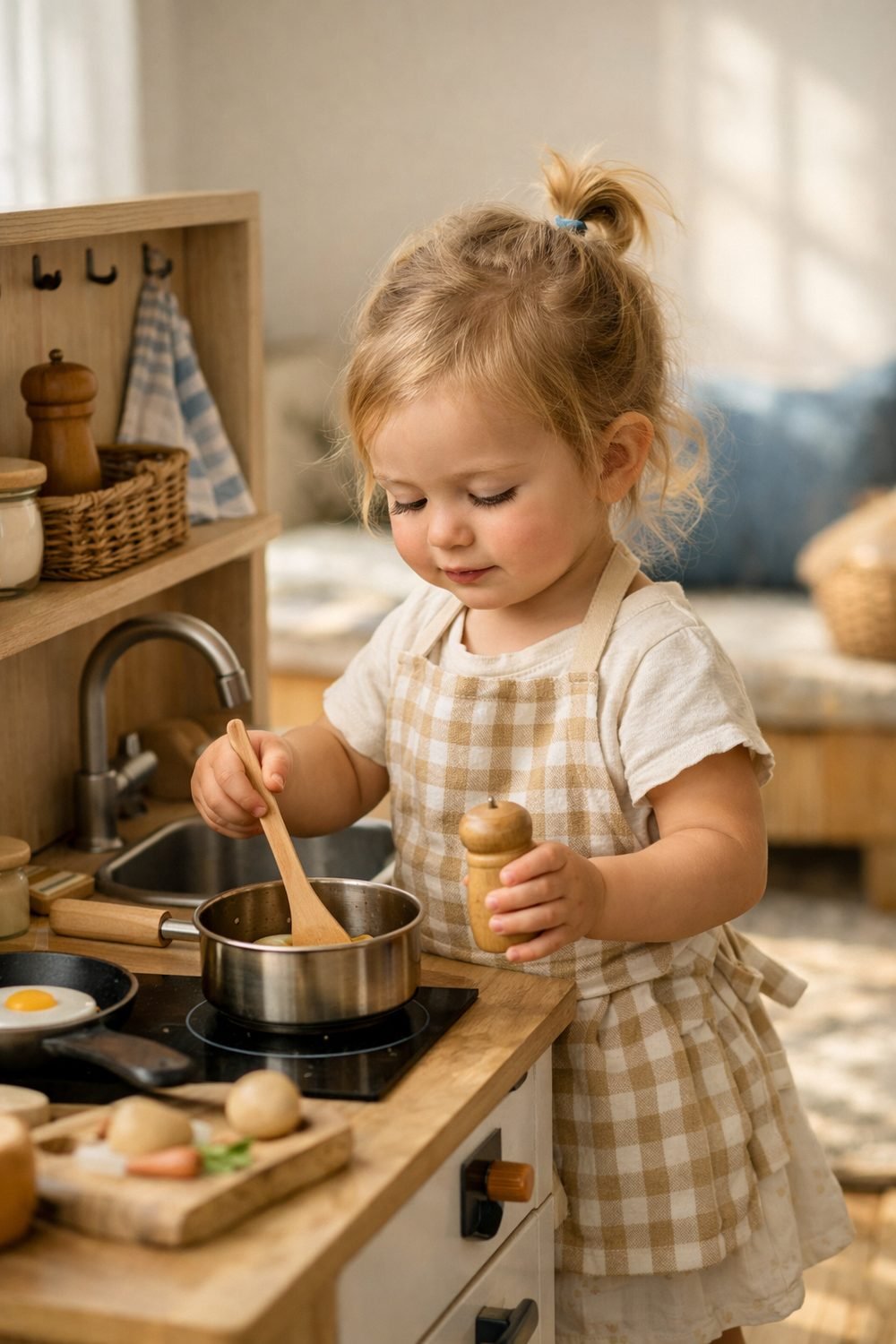
A toy kitchen set invites hours of pretend play. It can also take over a corner of your living room, cost more than you planned, and leave you on the floor at 10 p.m. with a bag of screws and a confusing diagram. Many parents run into this.
Before you buy a toy kitchen, it helps to ask a few plain questions. None of them are hard. They just save you from the "why did I get this?" feeling a week later. Here's what I'd think through first.
Short on time? Our top picks: IKEA Duktig, KidKraft, Melissa & Doug and Little Tikes. See all picks

1. How much floor space do you really have?
A play kitchen set can look small in photos. Then they show up and you realize they're nearly as wide as your couch. The listed size usually covers the kitchen itself, not the space your child needs to stand in front of it, open the little oven door, and wave a plastic spatula around.
Pick the spot first. Then measure the width, the depth, and the height if it's going under a window or a shelf. Leave room in front for your kid to move, and for a friend or sibling if they'll play together.
Tip: Use painter's tape to mark the kitchen's outline on the floor. Live with that taped box for a day or two. If you keep tripping over it, go smaller.
2. Wooden toy kitchen or plastic: which suits your home?
This is the question most parents start with, and honestly, both can work. A wooden kitchen set, like the ones from KidKraft, tends to feel sturdier and look nicer in a shared room. They're often heavier, though, and some are made from pressed wood or MDF rather than solid wood, so check the description.
Plastic kitchens, such as those from Little Tikes, are usually lighter and easier to wipe down. Many have more bright colors, sounds, and lights. Some kids love that. Some parents get very tired of the sizzling sound by day three.
For safety details like paint, finishes, and age ratings, read the seller's product page carefully. If you have questions about materials around a very young child, it's worth asking your pediatrician.
Tip: Search reviews for words like "wobbly," "peeling," or "cracked." Those little complaints tell you more than the five-star ones do.
3. What's actually included in the kids kitchen set box?
Here's where photos can trick you. The listing shows a kitchen full of pots, pans, fake eggs, and a tiny toaster. Then you read closer and find out half of that is "for display only" or sold separately.
Look for a clear list of what comes with it. Count the pieces if you need to. A kitchen with nothing in it isn't a dealbreaker, but you'll want to plan for a few extras so your child isn't just opening and closing empty cupboards.
Kids don't need a giant toy food set. A pot, a pan, a couple of spoons, and some real items from your own kitchen (a clean measuring cup, an old egg carton) go a long way.
Tip: Raid your own drawers before buying an accessory pack. Wooden spoons and small metal bowls are a hit, and you already own them.
4. Is it the right height for your child?
A kitchen that's too tall means your kid can't see the "stovetop." One that's too short means they'll outgrow it fast and start hunching over it like a grown-up at a kids' table.
Check the counter height listed by the seller. Then stand your child next to a table or counter at home and see where that height hits them. Around waist level or a little higher usually feels comfortable for play.
Some kitchens have adjustable legs or come in different sizes. That can stretch how long it gets used, which matters if it's a bigger purchase.
Tip: If you're torn between two heights, I'd lean slightly taller. Kids grow faster than you expect, and a step stool can bridge a gap for a few months.
5. How long will assembly take, and what tools do you need?
To put it plainly, some of these kitchens are a real project. Lots of small parts, lots of screws that look almost the same, and instructions that are mostly pictures. Reviews often mention how long it took, so read a few before you commit.
Plan to build it when your child isn't around, or at least when they're busy. Little hands love to "help" by carrying off the one bolt you need.
Tip: Sort the parts into labeled cups or a muffin tin before you start. It sounds fussy. It saves you so much searching.
Quick side note: if your evenings feel packed already, our free 1-Week Kids Chore Chart and Morning Routine Chart can help you carve out a calmer slot for things like this.

6. Where will all the little pieces live?
The kitchen is one thing. The forty tiny food items are another. They'll end up under the couch, in the bath, and in your shoe if you don't have a plan.
Some kitchens have built-in shelves, hooks, or bins. That's helpful, but it's rarely enough once you add a few extras. A small basket or a bin that slides into one of the cupboards makes cleanup simple enough that a young child can do part of it.
Tip: Make cleanup part of the game. "The restaurant is closing!" works better in my house than "pick up your toys," at least most days.
7. Will it hold up to real, messy play?
Kids don't play gently. They lean on the counter, slam the fridge door, and sometimes try to climb inside the oven. A kitchen that looks lovely but wobbles when you touch it won't last.
Look at how the doors attach and whether the knobs are glued or screwed on. Check if the seller says anything about weight limits, and follow it. If a kitchen needs to be anchored to the wall, the instructions should say so.
Tip: After building, give it a firm push from a few sides. If it shifts, tighten everything again before your child gets to it.
8. Does it fit how your child likes to play?
This one gets skipped a lot. Some kids want to cook. Others want to run a shop, sell you pretend coffee, or host a dinner party for stuffed animals. A plain kitchen with open space often works for all of those better than one with a lot of fixed features.
Watch how your child plays right now. Do they line things up? Hand you "food" over and over? Build things? That tells you a lot. If they love building and pretend shops, the Building Sets Mini-Store Starter Kit below this post might pair nicely with a kitchen for a little shop-and-cook setup.
Tip: I'd skip the kitchens with tons of electronic sounds unless your child really lights up for them. Quiet toys tend to get longer, more creative play.
9. Is it worth it for your budget right now?
Toy kitchens range a lot in price, and pricier doesn't always mean better for your kid. A simple one that gets used daily beats a fancy one that sits there looking pretty.
Think about how long your child is likely to use it and whether a younger sibling might inherit it. Secondhand kitchens are worth a look too. Just check them closely for loose parts and damage, and clean them well.
Tip: Set your top number before you start browsing. It's very easy to get pulled toward "just a bit more" once you see the deluxe versions.
Toy kitchen sets worth a look
If you'd like a starting point, these are well-known brands that make play kitchens. Treat them as places to begin, then run each one through the questions above.
IKEA Duktig
This is a simple play kitchen line from a big furniture retailer, and it suits families who want a plain, no-fuss look. Check the current size and what accessories are included before you order.
KidKraft
KidKraft makes a wide range of wooden play kitchens, from compact to large. It suits parents who want a sturdier, furniture-style piece. Check the assembly reviews, since bigger models can take a while to build.
Melissa & Doug
A familiar name in wooden toys, with kitchens and separate play food and cookware sets. It suits families who like to start small and add pieces slowly. Check the age rating and the list of included items.
Little Tikes
Known for durable plastic toys, this brand suits parents who want something easy to wipe down and light enough to move. Check how many sounds and lights it has if you prefer quiet play.
Step2
Step2 makes plastic play kitchens in many sizes and colors. It suits families who want a bright, easy-clean option for a playroom. Check the footprint and counter height against your child and your space.
Hape
Hape offers wooden kitchens and accessories with a clean, modern look. It suits parents who want a kitchen that blends into a shared room. Check the materials and finish details on the seller's page.
Lovevery
Lovevery sells play items and kits built around child development stages, including some pretend-play pieces. It suits parents who like a curated approach over a big pile of toys. Check whether the items fit your child's age and how you'd like to buy them.
Check current plans and prices on each brand's own site before you decide.
FAQ
What age is a toy kitchen set good for?
Many kids enjoy pretend kitchens from the toddler years into early school age, but every child is different. Always check the age rating on the seller's page, especially because some sets include small parts. If your child still puts things in their mouth, stick with sets meant for their age.
Is a wooden toy kitchen always better than plastic?
Not always. Wood often feels sturdier and looks nicer, while plastic is lighter and easier to clean. The better choice is the one that fits your space, your budget, and how your child plays.
Do I need to buy extra food and dishes?
Not right away. See what's included, then add a few things from your own kitchen. You can always add more later once you know what your child actually reaches for.
How do I keep the kitchen area from getting messy?
Give every type of piece a home, like one bin for food and one for dishes. Keep the number of accessories small and rotate them every few weeks. Fewer pieces out means faster cleanup and fresher play.
If you're working a toy kitchen into your family's day, a simple routine makes it easier. Grab the free 1-Week Kids Chore Chart and Morning Routine Chart in the sign-up box, and you'll have a ready-made way to add "kitchen cleanup" to the list. After that, take a peek at the products below this post, including the Building Sets Mini-Store Starter Kit and the Daily Family Routine Deals Page Publishing Kit, and see if either one fits what you're building at home.
Printables and tools that can help
Building Sets Mini-Store Starter Kit
A kit for planning a small building sets shop: product list, listing copy and...
See detailsDaily Family Routine Deals Page Publishing Kit
A kit for running a simple deals feed about stem toys: post templates and a weekly...
See details